Kenyan Entrepreneurs Look to China as New Market Opportunities Emerge
Over the years and regrettably so, the balance of trade between Kenya and many of her trading partners, especially those with GDPs higher than Kenya’s, has tended to be low and poor and mostly blamed on Kenya’s continuing exportation of raw, non-processed and thus non value-added goods. Economic experts have over time recommended aggressive and continuing industrialization of the economy which would boost the country’s manufacturing processes, increase Kenya’s competitive edge and also create much needed jobs.
Given the scenario and current reality many Kenyan businesses, have always considered China only as a source of affordable products, machinery and technology. But given tough reality of Kenya’s prevailing poor economic performance the relationship must change and Kenyans must start viewing the Chinese market as a manufactured and value-added exports market for Kenyan products. Great and diverse opportunities would open up if more Kenyan businesses would begin considering China not just as a place to buy from, but as a market to sell to as well. The sentiments were presented in Nairobi, Kenya on November 13th, 2026.
And these happen to be some of the realities explored in ‘A Glimpse of China in the New Era 2026,’ a television series that is covering stories of entrepreneurs, professionals and individuals building connections between China and other countries. The series also looks beyond commerce and is focusing on the culture, traditions and everyday lives of the Chinese people, to create greater mutual understanding between the two countries citizens, a strategy aiming to make the business partnerships stronger.
Promoters of the series, StarTimes, explain that the series was designed to change the way Kenyans usually think about the relationship. According to Mr Michael Mwai Mugo, Head of PR and Content Syndication at the company, thoughts about Kenya’s relationship with China have always been founded on a very unilateral perspective, where Kenya only acquires products from China. “What we hope to achieve with this particular project is to show that it can be a two-way traffic. Essentially, the television series highlights how partnerships, collaboration and cultural understanding could open doors for better and more reach for African businesses,” observes Mr Mugo.
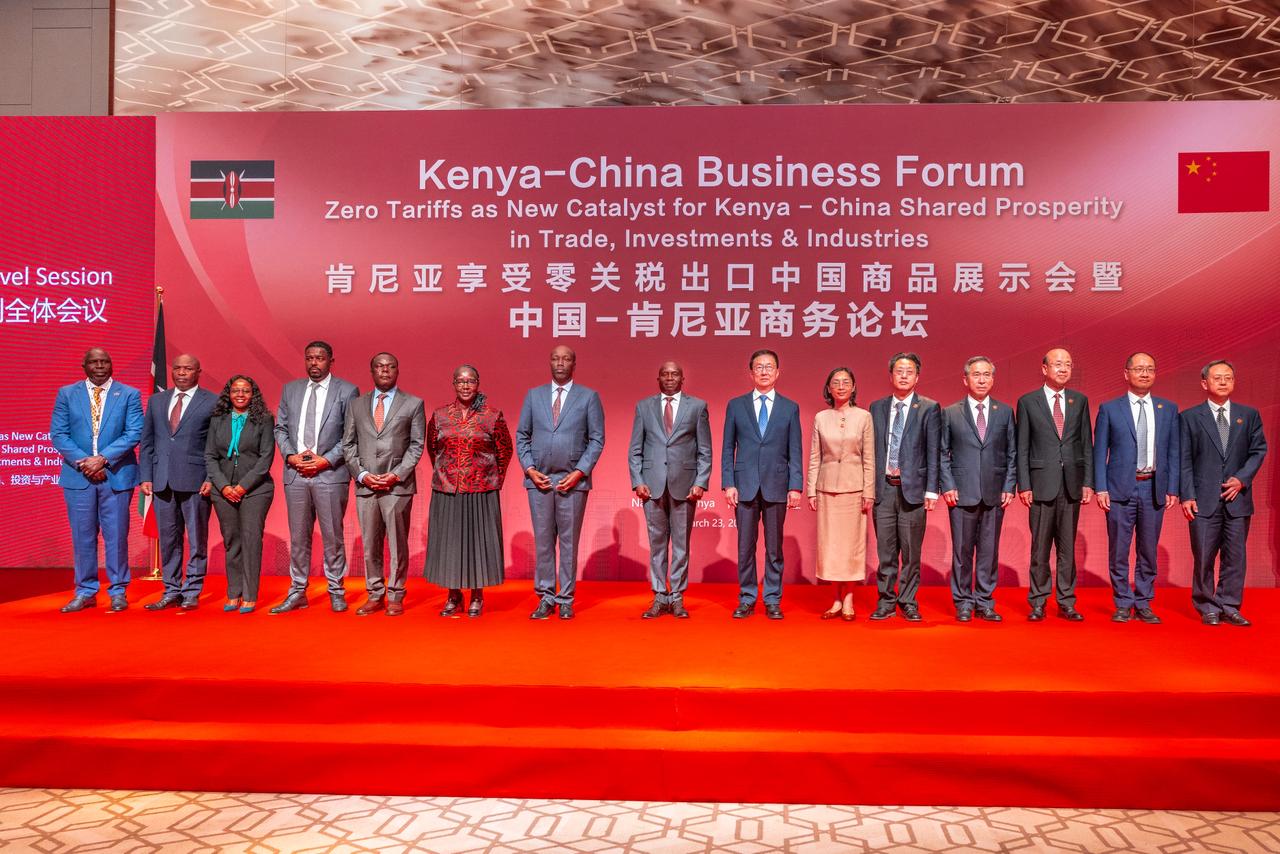
In reflection, Kenya’s exports to China stood at K sh 16.9 billion (B) in 2025 against imports of K sh 671.25 B. Consequently, Kenyan exporters have a considerable room for growth in a market of more than a billion consumers. Moreover, China’s decision to extend zero-tariff treatment to goods from 53 African countries, which took effect on 1 May 2026, has changed the terms for exporters. Reports show that avocado oil exports had risen 700 per cent and coffee exports had nearly doubled by the end of August.
Avocados form the basis for the most obvious exports opening. “From my experience, avocados are the most obvious export product from Kenya to China. This is due to the fact that China doesn’t grow avocados and only relies on imports,” explains Joyce Qiuyue Xiahou, the Assistant Marketing Manager at StarTimes.
According to Mr Mwai also presents a huge, massive market. “China is home to over 1.4 B people who would also present a huge market potential for other Kenyan products such as coffee and tea and among other agricultural exports,” affirms Mr Mwai further emphasizing increasing opportunities in that market.
Some of the Kenyan entrepreneurs featured in the series include Stephen and Dela, whose experiences form part of the program’s exploration of cross-border business opportunities. One of the business stories discussed in the series involves a Kenyan entrepreneur who has partnered with Zambian and Chinese companies to export food products to China. The collaboration illustrates an important lesson for African businesses: that accessing international markets sometimes requires working with partners who understand the markets, their regulations and the scales of demand.
China is a huge market, and volumes of products matter. According to Mr Mwai, the aforementioned Kenyan entrepreneur partnered with two firms, a Zambian company and a Chinese company, in order to export food products to China in the partnership this further indicating the real power in collaborations.
Each of the episodes go beyond the success story of the practical steps. “The people featured also explain the regulations they had to deal with,” Mr Mwai said. Some of the lessons include, for instance, how to export avocados to China; how to partner with a Chinese company to facilitate easier selling, and even how to find and identify that market in the first place.
Fundamentally, the series are not just about deals but also follow Kenyans and others who have studied, worked, married, settled and built lives in China with the producer (StarTimes) explaining that the human interest angle is deliberate. According to Mr Mwai roads and stadiums among other infrastructural projects can only go some distance. “Physical infrastructure is one thing. But the thread that puts all of us together is culture,” he said.
Further according to Mr. Mwai, the series aim to open up cultural exchanges by showing martial arts, traditional medicine, family life and cross-cultural marriages. As each side gets to understand the other better, he said, relationships grow stronger, and that extends to doing business together. In its 3rd season, the series aired on ST Zone and ST Novela E every Saturday and Sunday until 15 November, and can also be watched on the StarTimes ON app. StarTimes is also in discussions with free-to-air channels and could extend the run if viewers ask for more.
Beyond the TV medium, StarTimes is also hosting free community screenings in Nairobi, Mombasa, Kisumu, Eldoret and Nakuru, with more venues to be announced on its digital platforms. According to Mr Mwai, the screenings are also aimed at farmers of all ages, and are meant to show them that beyond traditional food supply chains, a new market is open.
From her conversations with Kenyans, Ms Xiahou is confident that the interest in China goes beyond business. Many people, especially younger Kenyans, want to visit for work or travel. She believes the younger generation is less drawn to Western culture than before. “China is as open as Africa is and this is a two-way, bilateral relationship. We can now take our goods to China, the same way China brings goods to us,” Mr. Mwai tells Kenyans in conclusion. {Ends}