KENCHIC (Kuku MFALME) Plant tour—Some Interesting Facts
SOME interesting facts:
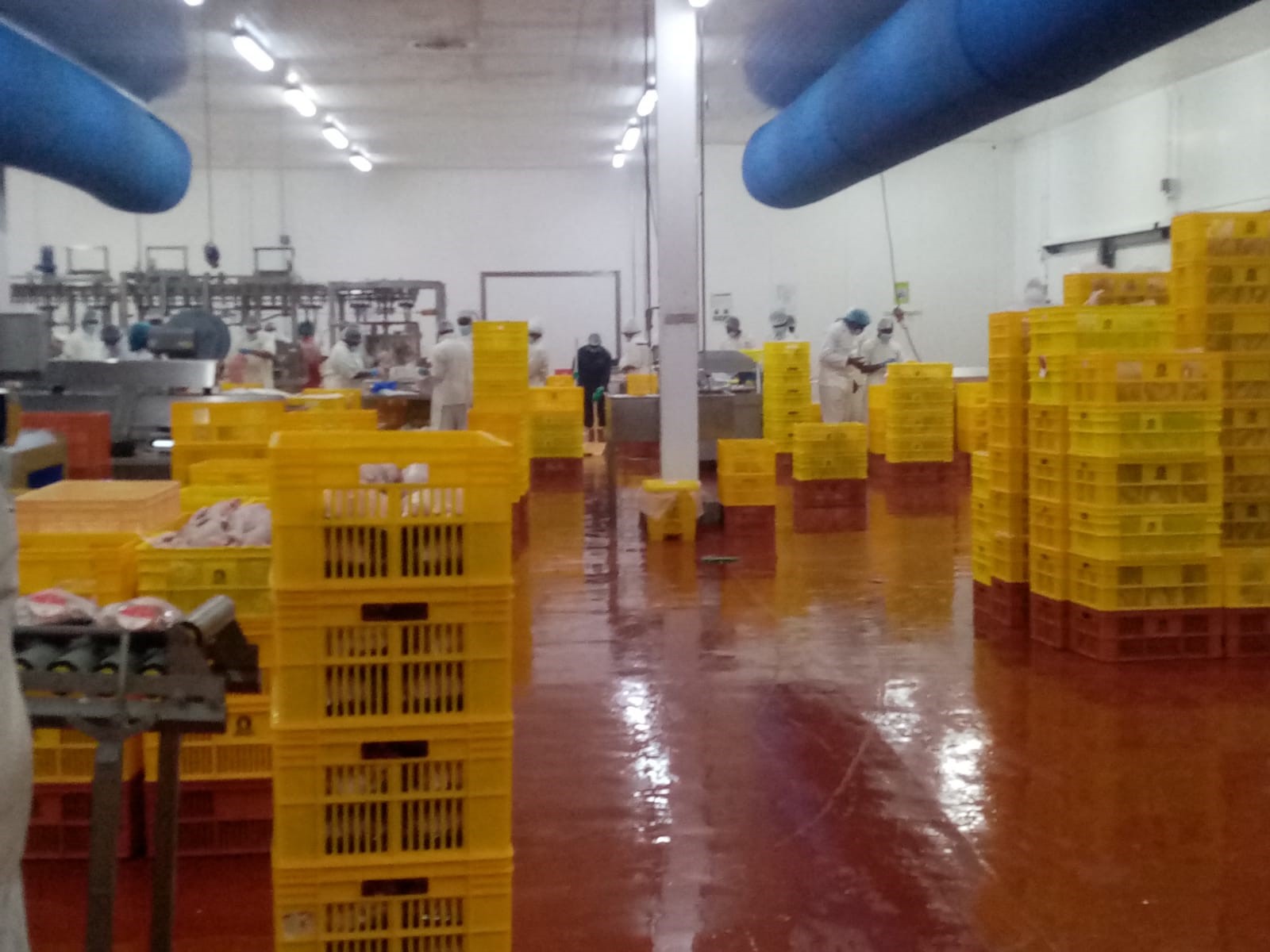
As is the rule, all visitors were briefed about the Plant and advised to wear PPE (Personal Protective Equipment)—a hair net, dustcoat, facemask and robust, sturdy gumboots. The tour started in cleaner areas and moved to dirtier areas to prevent cross contamination. some 2500 birds carrying crates are thoroughly cleaned in one of the areas also housing staff uniforms & PPEs laundry and collection point. —At the Plant operations commence at 1am with about 450 MT daily production and with about 15,000 chicken and 245,000 chicken slaughtered per day and per week respectively. Notably, 5 MTones of boneless chicken is processed daily.
—Cooling is paramount and extensive at the Plant given that 70 per cent of the products are sold & delivered fresh. In the cold stores are different cold streams –In one cold room, for instance, chicken is stacked in sacks and temperatures are taken to below minus 18 degrees Celsius. Another cold room holds chicken in crates also chilled to minus 18 degrees Celsius.
– Value-added chicken products include sausages and sandwiches which happen to be quite popular with consumers & especially popular is the Hungarian spicy chicken sausage. The products are processed in among others the cooked products and further processing rooms.
-To get the delicious products, chicken is minced and mixed with crushed bones and with the requisite spices and then rolled and then cooked for clients as per their recipes and requests and then packed. The ready products are than stored in the chiller fridge at 0 degrees Celsius to 4 degrees Celsius. Nevertheless, some of the clients need their products in 100 per cent raw form.
-The Plant develop packing/packaging labels in partnership with customers and also packs and chills chicken feet for some customers as per requests.
– Chicken, after the de-feathering process, enters the grading line in full form. The grading is essentially in terms of weight with some chicken weighing 1.2 kgs and 1.1 kgs. Notably, the graded chicken are then further processed in the Evisceration Room (EM) where the inside organs/parts and waste such as intestines are removed, after which the chicken is cut into different pieces namely chest (boneless), back, thighs, & wings after which the parts are thoroughly cleaned in the cleaning area.
–In the Giblet room (GR), the liver, heart and gizzards are processed and cleaned and prepared for sale to customers. Evidently none of the chicken parts go to waste. On average, each chicken is fully processed in about 90 minutes after the recommended one night rest after the slaughtering.
-The Plant’s contracted chicken breeders use a special diet in feeding the chicken ensuring that the chicken mature in five weeks. The breeders also conduct genes selection to ensure they supply the best quality chicken.
-The water used at the Plant is 100 per cent treated as explained by the officer in charge of the water & effluent treatment plants. On average 500,000 to 700,000 liters of water are used daily depending on processing schedules and demand.
-About 15 liters are used on each chicken. The water extracted from the nearby Chania River is 100 per cent treated and after use, the effluent is also treated in the effluent treatment plant and released back into the Athi River Riparian land. Both rivers are within very easy reach of the Plant. Ends