Efforts to Strengthen Biodiversity Restoration and Monitoring assessed in Nairobi Workshop
A Sub-regional Workshop on Biodiversity Monitoring and Reporting related to Target 2 of the Kunming–Montreal Global Biodiversity Framework (KMGBF) took place in Nairobi, Kenya, from 27 to 30 January 2026. Convened by the Food and Agriculture Organization of the United Nations (FAO), the Regional Centre for Mapping of Resources for Development (RCMRD), and the Secretariat of the Convention on Biological Diversity (CBD), the workshop (which gathered participants from 11 African countries including indigenous people and local communities { IPLCs} representatives and many other experts from all over the world) provided important conservation and biodiversity insights and revealed the determination in place for conservation and preservation of diversity and the general environment.
Yet despite the determination, biodiversity loss is still shocking and a worrying issue. According to FAO Forest Officer Yelena Finegold (one among the main presenters), biodiversity loss throughout the world is shocking.
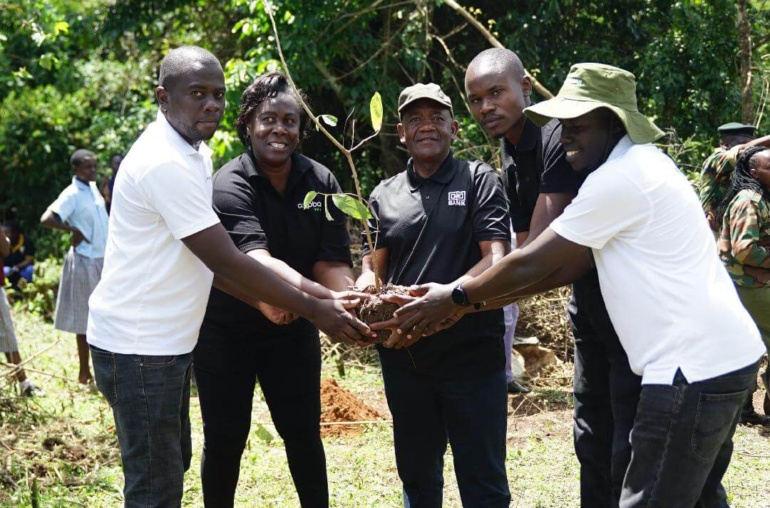
“Apart from the need to strengthen monitoring systems, there’s also need to capture data and report accurately. We also need a roadmap for clear reporting on biodiversity and global frameworks. The inclusion of diversity as a topic is also a plus for this workshop,” explained Finegold to the participants and appreciated that part of the workshop activities would include visiting forests around Nairobi.
According to Robina Abuya of the British High Commission’s (BHC)Foreign, Commonwealth & Development Office (FCDO) the UK government is committed to restoration of biological biodiversity and ecosystems restoration in regional collaborations that also build momentum from past dialogues. “Prosperity and climate change are strong focus areas at the BHC. We engage in inclusive endeavors for long-term decision. The 2025-2030 UK-Kenya partnership for biodiversity protection is one of such endeavors,” explained Abuya in her presentation. According to her adequate and reliable information on forests and nature helps countries in in refining gaps and restoration targets.
From the UNEP’s (United Nations Environment Programme) Target 2 presentations by Natalia Alekeseva, current progress in the UN Decade on Ecosystems Restoration (UNDER) (initiated in 2021) was reviewed and prospects for the next five years assessed. The Decade (UNDER) is based on the UN General Assembly (UNGA) mandate and is guided by given principles. So far progress include 27 flagship projects; 320 partners; data and proof and sustainability especially in fighting forest fires. And despite the challenge of short-term funding for projects, 2026 (mid-way) events have been planned and a report to the UNGA is in progress citing even upcoming priorities
In the diverse presentations and discussions regional leaders and experts urged countries to accelerate efforts to restore degraded ecosystems, noting that restoration commitments must be matched by strong monitoring, reporting, and data-driven action.
Some of the lessons learnt include the essence for more partnerships including in science 7 academia; more practical restoration examples with data & proof & knowledge and capacity building.
From the Centre for International Forestry Research (CIFOR) & International Centre on Research on Agro-forestry (ICRAF) Khalif Walji explained that a restoration self-assessment tool was developed in 2023 in partnerships. “There are lots on emphasis on forests alone but we also need more focus on other eco-systems too,” he observed.
Society for Ecological Restoration (SER) Int’l Policy George D Gann outlined the three major Ecosystem type to include coastal & marine; inland waters and terrestrial including dry land, & vegetation cover among others. He emphasized the need for setting national targets for each country for different outcomes such as biodiversity; ecosystem & forest services and ecological integrity among others. According to him different degradation definitions are in place and it is important to have binary indicators. “We’ve national regional and global degradation measuring systems including spatial data that supports national and remote data collection. All these are important for measuring ecosystems degradation and ecosystems integrity,” he added.
Wide ranging discussions: At the opening session, Kenya’s Ministry of Environment, Climate Change and Forestry Cabinet Secretary, Dr. Deborah Mulongo Barasa emphasized the importance of translating restoration commitments into tangible, measurable outcomes. She noted that ecosystem restoration is essential in addressing biodiversity loss, climate change, and sustainable development, but warned that progress cannot be demonstrated without credible monitoring and reporting systems.
“Restoration is about giving nature a chance to recover and in doing so, protecting livelihoods, securing water, supporting food production, and building resilience to climate change. But restoring ecosystems is not enough. We also need to be able to explain what we are doing, show what is working, and learn from what is not. The next few years will determine whether restoration commitments become reality or remain promises on paper,” observed Dr. Barasa.
Echoing the sentiments, Chairperson of RCMRD Governing Council and Permanent Secretary Ministry of Lands and Natural Resources, Zambia, Patrick Mucheleka highlighted the value of sub-regional cooperation in delivering global biodiversity commitments. He observed that while countries face different ecological and socio-economic contexts, they often share common challenges related to data availability, technical capacity, and reporting requirements. “Across our region, we all face similar challenges, land under pressure, ecosystems that are stretched, and communities that depend directly on nature for their livelihoods. We also share the same responsibility: to turn our restoration commitments into real action,” he explained.
The Executive Secretary of the Convention on Biological Diversity (CBD), Astrid Schomaker, in a video message, emphasized the critical role partnerships play in addressing the multi-faceted planetary crisis of biodiversity loss and land degradation, climate change and pollution and waste. “We need all hands on deck. The world needs a whole-of-government and whole-of-Society acceleration in the implementation of the Global Biodiversity Framework,” Schomaker affirmed.
As aforementioned, the workshop gathered policymakers and technical experts from 11 countries in Eastern and Southern Africa to accelerate the implementation of Target 2 of the KunmingMontreal Global Biodiversity Framework, ensuring that, by 2030, at least 30 per cent of degraded areas of terrestrial, inland water, and coastal and marine ecosystems are under effective restoration. The countries involved include Comoros, Eswatini, Ethiopia, Kenya, Madagascar, Rwanda, Somalia, South Sudan, Uganda, United Republic of Tanzania, and Zambia. The workshop also marked the official launch of Regional Centre for Mapping of Resources for Development’s role as a Sub-regional and Technical Scientific Cooperation Support Centre, alongside the establishment of its Steering Committee. In this role, RCMRD will support countries in Eastern and Southern Africa to accelerate implementation of the KMGBF by providing coordinated scientific, technical, and data-driven support.
“With its new role as a Subregional Technical and Scientific Cooperation Support Centre, RCMRD is ready to support countries with the data, tools, and coordination needed to deliver on Target 2,” assured Dr. Emmanuel Nkurunziza, RCMRD’s Director General. The workshop also brought together participants from the other four Sub-regional TSC Support Centres in Africa including Central African Forest Commission (COMIFAC), Ecological Monitoring Centre (CSE), Sahara and Sahel Observatory (OSS) and South African National Biodiversity Institute (SANBI). (Ends)