A pioneer committed to a cleaner environment and technological innovation:
For a long time, toilet waste/sewer and effluent disposal posed a serious threat to the general environment and an equally serious challenge to houses owners and building contractors. The only known way in the disposal of such waste was in septic tanks that were expensive to construct and which required large spaces. The septic tanks required regular and costly maintenance including their emptying through exhauster tanks and would even with time fail and lead to leaking and damage to the general environment. But thanks to innovation and in a fast forward move to modern building technology, the huge (and laborious to construct) septic tanks have been replaced by bio-digester tanks.
It is always said that necessity is the mother of invention and this reality came to bear for Mr Edwin Kirugo after he faced difficulties and high costs as he was constructing his own home and trying to install the traditional septic tank in Thika in 2018. Taking cognizance of the challenge and keen to find a lasting solution, he founded Bio Tank Africa Ltd and thus heralded the acceptance and wide application and utilization the modern bio-digester technology in an earnest such for innovative solutions.
Constructed of moulded plastic, the modern bio-digester tank as promoted by Bio Tank Africa is study and robust and easy to install and comes in four different sizes. Said to be relatively maintenance free even with earth and geological movements, due to the materials used and its elliptical shape, it is built to hold three separate chambers in innovative biodegradation technology it is fed or dosed with bio-enzymes that feed on toilet waste which eventually leave the digester as a plain liquid that goes into a soak pit (or soak away pit) that drain the liquid into the earth for further percolation and cleansing through layers of rocks in mother earth. Also conscious that the use of pit latrines is still a wide practice for faeces (human waste) disposal in many peri-urban and rural areas in the country, the company also provides solutions that naturally digest waste in pit latrines leaving much of such waste as effluent that soaks down to the earth structure and rocks.
 The company’s mission is also driven by the reality of the health challenges driven by poor sanitation in most parts of Kenya and wider Africa. In Kenya currently, only 11 per cent of waste water is treated, leaving onsite sanitation as the primary solution nationwide. The low waste water treatment negatively affects over 15 million people leading to prevalence of various water borne diseases (including cholera, dysentery, typhoid fever and H Pyroli among others) and which predominantly affect children and further cost government authorities and agencies over K sh 9 billion to treat each year. Notably, the bio-digester helps in preventing contamination of site and ground water contamination and stops environmental pollution.
“In three chambers, the bio-digester is a ready-made tank unit that is annually fed or ‘dosed’ with bacteria (enzymes) that degrade toilet sludge anaerobically using the displacement principle of ‘sludge in and sludge out’. Initially we had concrete bio-digester tanks but with innovation, the moulded plastic tank (Bio tank Africa’s premier product)provides over 50 years guarantee and is efficient and user-friendly with the enzymes completely killing or eating the waste and leaving no stench at all,” explains Mr Peter Mathenge, Bio Tank Africa National Sales Lead. The company also offers a solution for kitchen and bathrooms effluent. While the toilet waste pipe is termed ‘black’ and fed to the bio-digester, the kitchen waste pipe is termed ‘grey’ and is instead fed into a grease trap with effluents from both pipes eventually differently feeding into the soak pit. Remarkably, the company is committed to training and empowering ‘Fundis’ (technicians) including masons, carpenters and other but especially plumbers on the bio-tank technology and installation of the tanks. Headquartered in Thika and with branches in Kitengela, Ruiru and Nakuru, the company has since 2023 conducted 4 Fundi Forums where the Fundis have been adequately trained. In its manufacturing, sales and training endeavours, Bio Tank Africa is guided by its core values that include integrity, technical excellence, superior customer care and collaborations and synergy as exemplified in such Fundi trainings and empowerment.
Bio Tank Africa Ltd’s Country-wide training:
During its 4th Fundis national-wide training session (seeing that the Fundis to be trained travel from different parts of the country for such trainings) in Kitengela, Kajiado County over 400 local fundis, plumbers, and contractors apart from the training also received official NCA (National Construction Authority). One of its largest training session so far, the event officially marked BioTank Africa’s new county-by-county initiative to upskill thousands of construction tradespeople across Kenya on modern, sustainable bio-digester and wastewater technology.
Kitengela was strategically selected due to its rapid real estate expansion paired with the absence of widespread municipal sewer coverage a common reality across Kenya’s emerging urban centres, and where property developers rely heavily on decentralized wastewater solutions.
“Our Fundis are our primary brand ambassadors on the ground, making sure every installation protects public health and meets strict quality standards. With over 90 percent of the country depending on onsite sanitation, the artisans we accredit today are directly building safer, cleaner communities for tomorrow. Taking this Forum county by county ensures we take world-class technical training directly to where fast-paced construction is actually happening,” affirmed Mr Kirugo at the August 28th, 2026 training session.
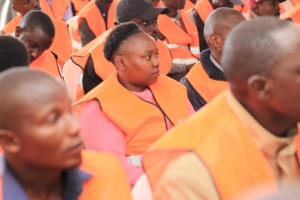 The event also marked a key milestone for BioTank Africa as it celebrates eight years in the Kenyan market and following its April 2026 launch of “Kuwa Mbele Jenga Easy” campaign, the opening of its Nakuru branch, and upcoming plans to roll out a nationwide distributor network.
The Kitengela day-long practical training drive also directly responded to a major national technical gap. Data from the NCA indicates that while over 90 per cent of Kenyan developments rely on onsite wastewater systems, only 30 per cent of local construction artisans hold formal technical training. Participants at the Kitengela Forum completed structured practical modules and were awarded official technical accreditation certificates issued directly by the NCA, as part of the regulator’s ongoing partnership with BioTank Africa to formalize skills and safeguard installation, safety, and environmental standards on site.
“Fundis should be agents of compliance, because if you build without proper licences, you are the one who will be arrested,” said James Karatu, President of the Real Building Workers Association of Kenya (REBWAK); a member organisation representing construction workers and promoting compliance and worker welfare. He urged Fundis to view themselves as agents of accountability, also cautioning artisans on the need for financial literacy, noting that many Fundis, paid daily wages, struggle to manage their earnings.
Bio Tank Africa is transitioning from localized training sessions into a mobile, county-by-county rollout and is expanding its scope to build an accredited network of skilled artisans across Kenya.
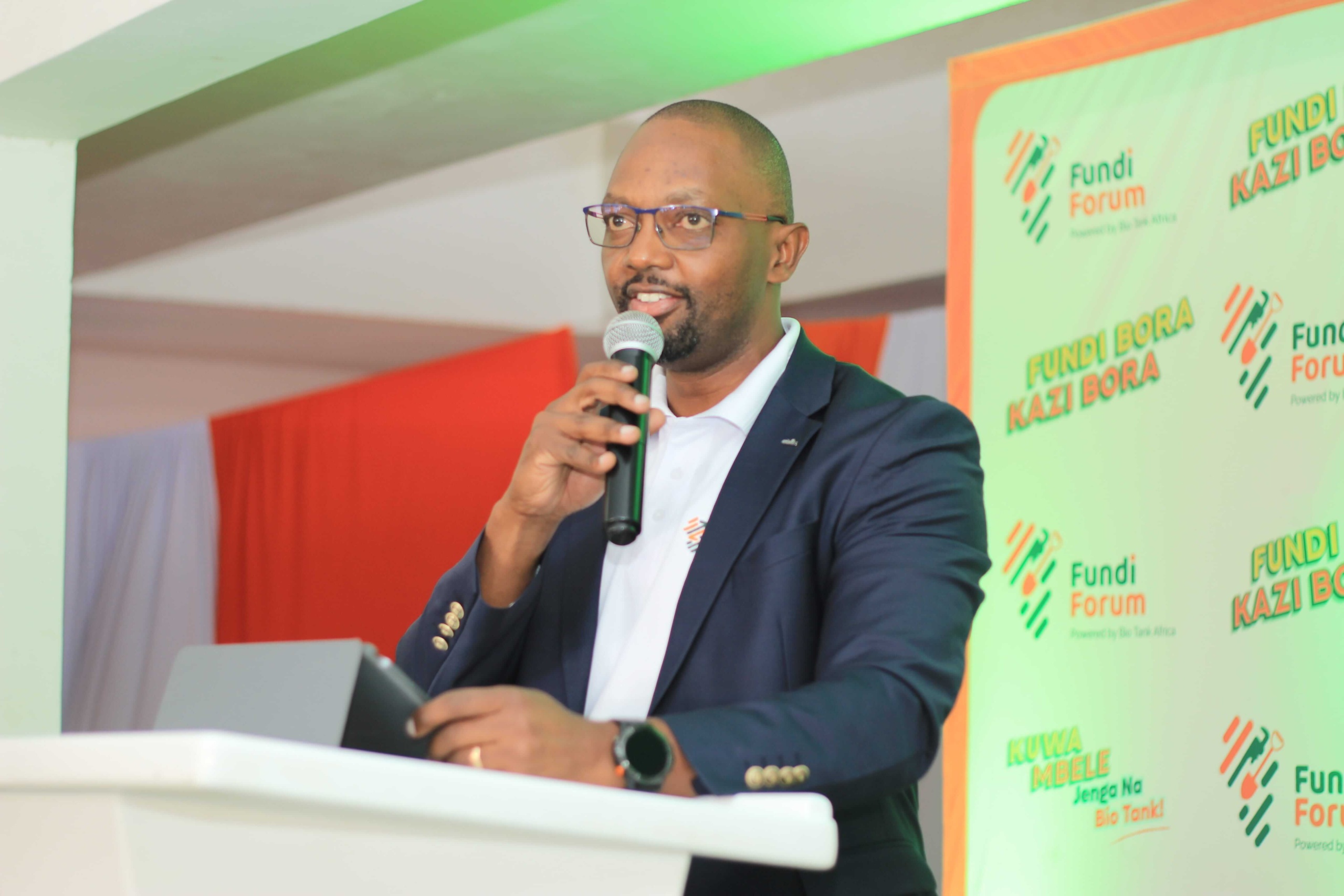
“When the Fundi’s skills improve, building & construction standards improve, and the customer wins and especially with construction and sanitation industries which are evolving every day. Moreover, today’s customer is more informed, and with AI, customers are the ones now searching for the Fundis they want. The modern Fundi is one who is always learning, keeps up with changing technology, maintains high standards, and is trustworthy. As a ‘Fundi’, your reputation is your capital,” added Mr Kirugo, at the forum dubbed ‘Fundi Bora Kazi Bora.
The recent Forum also highlighted the increasing role of women in the B & C (Building & Construction) and sanitation trade. For instance, Nellygrace Korika, 25, a plumber from Njiru, Kasarani, Nairobi, with two years in the trade, attended to learn and network: “As women, we can also be good plumbers. I came here to learn and network. Plumbing is always changing, and I wanted to know what the latest innovations are, plus these events also give me jobs,” Korika observed.
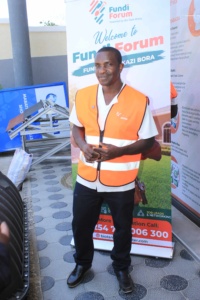 For returning artisans, the Forum’s value compounds year-on-year. Hassan Isadia, a plumber from Eldoret with a decade of practice and who has attended the Forum for four consecutive years, said the training has directly grown his business: “This training has helped me grow my business. I get more customers as I get the latest skills. I‘m happy I got certification today from NCA.”
The forum featured live installation demonstrations, practical business clinics to help artisans formalize their enterprises, and one-on-one access to technical experts including Architects and engineers.
Notably, BioTank Africa Ltd is a pioneer in sustainable, modern wastewater management solutions. The company manufactures and distributes ready-made, eco-friendly plastic and concrete biodigesters, offering cost-effective alternatives to conventional septic systems across residential, commercial, and institutional sectors nationwide. Its product lineup includes BioTank Biodigesters, Grease Trap Pro, Bio Clean Septic Tank Enzymes, and Tazo Natural Home Cleaning Products. For more information, visit https://biotankbiodigester.com/