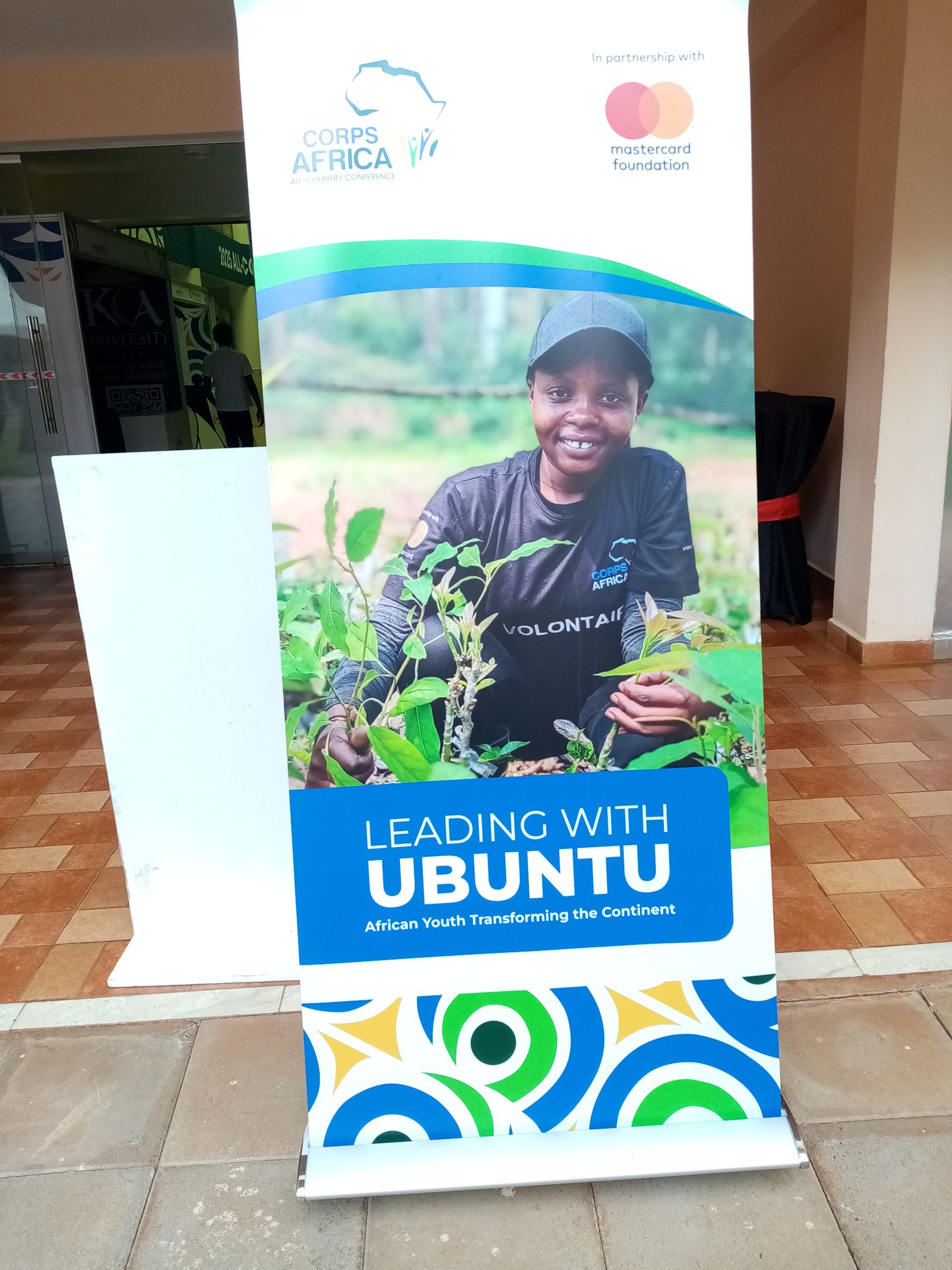
CorpsAfrica All Country Conference, 2025: A massive youth event and experience in Kenya
CorpsAfrica All Country Conference, 2025:
A massive youth event and experience in Kenya:
I spent a memorable day, June 19th, 2025, with vibrant and friendly, curious young people at the Kenya School of Government (KSG) at Kabete Sub County in Nairobi County. Indeed, I felt nice and young as I interacted with the young people who enthusiastically participated in the CorpsAfrica’s All Country Conference (ACC) that happened at the KSG between June 16th and 20th, 2025. Remarkably, the Pan-African event gathered over 1000 CorpAfrica’s volunteers, alumni, staff and other interested persons from all over Africa.
I met two enthusiastic young women from Sierra Leone who tried to talk to me in Kiswahili; “We’re very excited to be in Kenya to learn about your country and the different cultures. We’re doing our best despite the language barriers since our official language in Sierra Leone is French. We hardly know any English but we are trying to communicate in Kiswahili,” they told me in a brief chit chat on our way from lunch break and heading onto to Breakout Sessions spaces.
The participants experienced five days of reflection, peer learning and skills exchange, alongside the celebration of volunteerism as a tool for youth empowerment across the continent.
Guided by the spirit of Ubuntu, the ACC 2025 offered a unique platform and opportunity for stakeholders to collaborate, share insights and showcase impact in shaping the future of community-led, youth-driven development through programmatic, leadership and policy conversations on the diverse issues affecting youth development in Africa. (Notably, Ubuntu is described by Artificial Intelligence (AI) sources as an ancient African philosophy emphasizing interconnectedness, community, and humanity. It suggests that a person’s identity and well-being are deeply connected to the community and that one’s humanity is realized through relationships with others. Essentially, it translates to “I am because we are,” highlighting the importance of collective responsibility and mutual support).
Interestingly, the ACC 2025 (under the theme—‘Leading with Ubuntu, African Youth Transforming the Continent’) was hosted in Nairobi at a time of renewed agitation by young people (Gen Z) in the continent, especially due to lack of jobs and access to entrepreneurship and other economic participation opportunities.
The ACC was last held in Kigali Rwanda in 2023. Various distinguished guests attended or were expected at the grand official opening on June 18th at 8.30 am, at the KSG and these included Hon. Salim Mvurya – CS, Ministry of Youth Affairs, Creative Economy and Sports; Hon. Fikirini Jacoba – PS, Ministry of Youth Affairs, Creative Economy; Liz Fanning – Chief Executive Officer, CorpsAfrica; Hannah Tsadik – Country Director, MasterCard Foundation; Prof. Nura Mohamed – Director General, Kenya School of Government; Prof. Kivutha Kibwana – Former Makueni Governor and Professor of Law, Daystar University; Hon.Patience Masua – Youngest Member of Parliament, Namibia; Joshua Kweikuma Quaye – Youth Engagement and Program Lead at the African Union’s Women, Gender, and Youth Directorate; Grace Maingi, Executive Director – Kenya Community Development Foundation; Pauline Mbayah, Executive Director and Head of Stanbic Kenya Foundation; Aisha Shuaibu, President SWA Sports, Nigeria.
At one of the Breakout sessions, I joined youths and other participants in a session led by Martin Ndlovu Gebeya from Southern Zimbabwe on the topic ‘Entrepreneurship strategies’. “Why is there so much optimism in entrepreneurship all over the world?” was the opening question from the seasoned entrepreneur and a Demo Africa 2014 award winner & also Swell Innovation Award winner, in what turned out as a very interesting and interactive session.
“A few years ago in the developing world—and especially in Africa, there was a Start-Ups Gold Rush with Venture Capitalists (VCs) being very keen to fund entrepreneurs,” Martin explained.
He outlined that by 2019 US $ 1.4 billion (B) was given out leading to the birth of unicorns and by 2021 about US $ 5 B was given out in the Fintech mayhem. By 2023, the funding dropped to US $ 3.4 B (this is also the time that the ChatGPT was released thanks to Artificial Intelligence (AI). On the contrary, today the reality is quite different with VCs now seeking to see results (not vibes) before they can fund entrepreneurs.
“Today, essentially, there is need for profitable businesses and the game has changed. VCs are keen to see moving sales, traction and profitability,” he revealed.
Tips for venturing into entrepreneurship:
Step 1 should be identifying the problems facing communities and starting with these not your ideas some of which may be quite lofty. “Find the pain and the money shall follow and note that communities identify with the problems that that affect them directly. For instance, conventionally taxis would take too long to access not to mention the high costs of using them so the founders of hail taxis identified this problem and went on to starts the hail taxis business,” he expounded.
“State the problem correctly and if possible identify a big enough problem or challenge to ensure that it shall be profitable,” Martin added.
Step 2 should involve testing the assumption of assumed problem(s). “Use the various available tools such as Goggle trends, twitter, Reddit and other online signals. Also use opinion polls including from Whatsapp Groups for quick feedback on the challenges you wish to tackle. Conduct the problem(s) interviews and have target audiences of 5 to 10 or more people. “Have a learning page and identify how painful the problem you wish to tackle is. Confirm whether people are really willing to pay for your solution,” Martin advised his attentive audience.
Step 3 involves building a minimum viable product (MVP). “Ensure you have creative details on your business ideas; have a target market and especially use the available tools for validation of your business ideas,” he advised. He regretted the fact that some Small & Medium Enterprises (SMEs) lack constant customers leading to dearth and collapse of some of the businesses.
Martin also gave tips on profitability. “Choose products with prospects for profitability. Service providers must take account of the ever present need for using other service providers for a complete cycle of the intended solutions,” he added.
He emphasized the reality that 70 per cent of jobs in Africa are provided by SMEs and stated the dire need for these to automate in order to lower operations & production costs. According to him, automation must happen despite the tough reality of job losses especially from adoption of AI. He urged businesses to avoid if possible competitive tasks.
“Each and every part of the business must be under-go innovation in order for costs to be lowered and to increase profits. Keep innovating as you try to reach your target markets and don’t be perturbed even when your ideas are rejected. Keep thinking of new ones,” he advised. “As much as is possible avoid relying on external funding,” Martin added.
Regarding talents and special aptitude, Martin observed: “Investing in your hobbies/talents also requires business acumen. Talents can be very difficult to commercialize. If you face terrible pains in providing products (goods or services,) your high pricing can always be viable and justifiable,” he observed.
“Yet, SMEs can still offer good value through cheaper yet better quality products,” concluded the witty and very informed gentleman from a mixed family of a Russian mummy and a Zimbabwean daddy. Ends {Fred Ndungu}